
Gonzos quest: play and withdraw real money!
Home → Strategy
Gonzo's Quest Strategy
Approaching Gonzo's Quest sensibly
Gonzo's Quest is a 5x3 slot developed by NetEnt in 2011 featuring 20 fixed paylines and an RTP of 95.97%. This theoretical return over a very long run implies a house edge of 4.03%, which exceeds the 99.00% RTP found in Mega Joker. Players must accept that the mathematical advantage always favors the casino regardless of their strategy or timing.
The game utilizes medium-high volatility, meaning wins occur less frequently but tend to be larger than low-volatility alternatives. The maximum win is capped at 2,500x the stake, limiting potential payouts compared to games with higher caps. This structure requires patience and a solid bankroll to survive dry spells between significant Avalanche cascades.
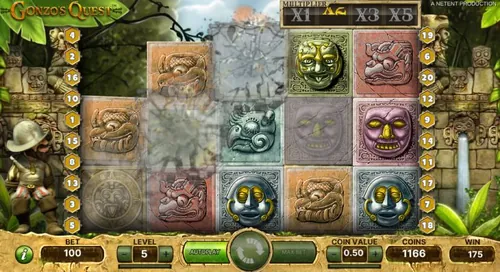
Avalanche mechanics replace traditional spinning reels by removing winning symbols and dropping new ones into empty spaces. Wild substitutes can complete combinations across the five-reel layout during these cascading sequences. This unique feature increases engagement but does not alter the underlying RTP or improve the player's long-term odds.
Bankroll rules that hold up
Flat betting involves wagering the same stake every round, avoiding progressive staking systems that raise stakes after losses. Progressive staking does not change the built-in edge and only shortens the time to ruin for the player. Gonzo's Quest has a maximum win of 2,500x, so large bets risk rapid depletion without guaranteeing a return.
The developer NetEnt released this title with an RTP of 95.97%, establishing a theoretical return over hundreds of thousands of spins. A session bankroll should cover at least one hundred times the average bet size to withstand normal variance. This buffer allows players to experience the full range of the medium-high volatility profile without early bankruptcy.
Unlike Mega Joker which offers a 99.00% RTP, Gonzo's Quest carries a higher house edge of 4.03%. Players should calculate their expected loss based on total turnover rather than focusing on short-term results. Setting aside a dedicated bankroll ensures that gambling remains entertainment rather than a financial liability.
Bonus terms may offer a 300% welcome bonus up to €2,000 plus 100 free spins for new accounts. These funds increase playing time but usually come with wagering requirements that must be met before withdrawal. Always read the specific conditions attached to such promotions to understand the true value of the extra credits.
Bet sizing against volatility
Gonzo's Quest features a reel layout of 5x3 with 20 fixed paylines, requiring bets on all lines per spin. Medium-high volatility dictates that smaller stakes preserve the bankroll longer during losing streaks common in this tier. A 2,500x max win cap means high rollers need substantial funds to chase the top prize effectively.
NetEnt designed the game with an RTP of 95.97%, which remains constant regardless of the bet size chosen. Increasing the wager raises the absolute amount won or lost per spin but does not improve the percentage return. Players should select a stake level that allows for at least two hundred spins to smooth out variance.
Mega Joker uses three reels and offers a 99.00% RTP, contrasting sharply with the five-reel structure of Gonzo's Quest. The latter's 4.03% house edge makes flat betting essential for managing risk over extended sessions. Betting too aggressively against medium-high volatility can deplete funds before hitting a Free Falls multiplier sequence.
The Avalanche mechanic removes winning symbols, allowing consecutive wins from a single spin to accumulate multipliers up to 15x. These cascades can significantly boost returns but are unpredictable and depend on random symbol placement. Smaller bets ensure survival during non-winning rounds while still qualifying for the lucrative Free Falls bonus round.
Session limits worth setting
Setting a time limit prevents fatigue-induced errors when playing Gonzo's Quest, a slot released by NetEnt in 2011. Medium-high volatility means sessions can last longer due to frequent small wins interspersed with dry periods. A predefined duration helps maintain discipline and ensures the player stops before emotional decision-making takes over.
The RTP of 95.97% indicates a house edge of 4.03%, meaning expected losses accumulate steadily over time. If a player spends €100 per hour, they might expect to lose €4.03 hourly on average. This calculation underscores the importance of stopping once the predetermined budget is exhausted, regardless of recent outcomes.
Gonzo's Quest offers a maximum win of 2,500x, which could theoretically turn a small stake into a large sum. However, achieving this requires hitting the highest multiplier during Free Falls, an event with low probability. Setting a win goal, such as doubling the initial bankroll, provides a clear exit point before profits evaporate.
Unlike Mega Joker with its 99.00% RTP, Gonzo's Quest presents a steeper climb for profitable sessions. The 20 fixed paylines require consistent betting, making it harder to pause between decisions. Establishing strict deposit and loss limits protects the player from chasing losses during unlucky stretches typical of volatile slots.
Why chasing losses fails
Chasing losses involves increasing bets to recover previous deficits, a strategy that ignores the immutable house edge of 4.03%. Gonzo's Quest has an RTP of 95.97%, ensuring the casino retains a statistical advantage over any number of spins. Progressive staking systems cannot overcome this mathematical reality and often accelerate bankroll depletion.
NetEnt designed Gonzo's Quest with medium-high volatility, causing unpredictable swings in balance that tempt impulsive behavior. The 2,500x max win cap limits upside potential, making recovery from deep losses extremely difficult. Players who ignore these constraints often exhaust their funds before a significant win occurs.
The Avalanche mechanic creates excitement through cascading wins, but each outcome is independent and unaffected by previous spins. Believing a big win is due because of recent losses is a cognitive bias known as the gambler's fallacy. Accepting the 95.97% RTP as a long-term average prevents futile attempts to beat the system.
Mega Joker offers a 99.00% RTP, providing better odds than Gonzo's Quest, yet still cannot be beaten consistently. The 20 fixed paylines mean every spin costs the same, removing the option to reduce exposure temporarily. Rational play requires accepting losses as part of the cost of entertainment rather than trying to reverse them.
Gonzo's Quest: key facts
| Parameter | Value |
|---|---|
| Game | Gonzo's Quest |
| Studio | NetEnt |
| Released | 2011 |
| RTP | 95.97% |
| House edge | 4.03% |
| Volatility | medium-high |
| Max win | 2,500x |
| Reels | 5x3 |
| Paylines / ways | 20 fixed paylines |
Common systems and their limits
Gonzo's Quest by NetEnt operates on a 5x3 reel layout with twenty fixed paylines, establishing the structural framework for all betting strategies. The medium-high volatility rating of this title indicates that wins are less frequent but potentially larger than in low-variance slots. This mathematical profile demands a bankroll capable of sustaining longer dry spells without forcing early termination of the session.
The Avalanche mechanic replaces spinning reels with cascading symbols, allowing consecutive wins within a single spin to accumulate multipliers up to 15x during Free Falls. Unlike progressive staking which raises stakes after losses, flat betting maintains a constant stake every round to preserve the theoretical RTP of 95.97%. This approach ensures that the house edge of 4.03% remains constant regardless of the player's emotional state or recent outcomes.
Comparing Gonzo's Quest to Divine Fortune reveals distinct strategic differences despite both being NetEnt creations with five reels. Divine Fortune features a medium volatility profile and a maximum win cap of 1000x, whereas Gonzo's Quest offers a higher maximum win potential of 2,500x. Players seeking more frequent smaller payouts might prefer the former, while those chasing larger returns must accept the variance inherent in the latter.
Flat betting explained
Flat betting requires the player to wager the same stake amount on every single spin throughout the entire gaming session. This method avoids the psychological trap of chasing losses by increasing bets after setbacks, which only accelerates the depletion of the available bankroll. By keeping the bet size static, the player can better manage their funds over a large number of spins without erratic fluctuations.
The theoretical return to player (RTP) of 95.97% for Gonzo's Quest applies equally to flat betting as it does to any other strategy. Since the house edge is built into the game mechanics, no betting pattern can alter the long-term expected loss per unit wagered. A consistent stake allows for accurate tracking of turnover and helps players understand the true cost of entertainment over time.
In contrast to progressive staking methods that adjust wagers based on previous results, flat betting treats each spin as an independent event. The maximum win of 2,500x is determined solely by the game's random number generator and symbol combinations, not by the size of the bet relative to previous rounds. This simplicity reduces decision fatigue and keeps the focus on the gameplay mechanics rather than complex financial management.
Progressive staking risks
Progressive staking involves raising the stake amount after a losing spin, a tactic often used in attempts to recover previous losses quickly. This strategy does not change the built-in house edge of 4.03% in Gonzo's Quest and significantly increases the risk of rapid bankroll exhaustion. The mathematics of the slot remain unchanged, meaning the casino retains its statistical advantage regardless of how the player adjusts their wagers.
The medium-high volatility of Gonzo's Quest means that losing streaks can be prolonged and severe, making progressive staking particularly dangerous. A player might exhaust their entire bankroll before hitting a winning combination that could have covered the increased stakes. The maximum win cap of 2,500x is a fixed limit imposed by the game rules, not a guarantee of recovery for high-stakes bettors.
Unlike flat betting which preserves the bankroll for extended play, progressive systems often lead to ruin due to table limits and finite funds. The 20 fixed paylines in Gonzo's Quest require specific symbol alignments, and no amount of increased betting can force these combinations to appear more frequently. Understanding this limitation prevents players from falling into the gambler's fallacy that a big win is imminent after a series of losses.
What the maths actually allows
The Return to Player percentage of 95.97% for Gonzo's Quest represents the theoretical long-run average return over hundreds of thousands of spins. This figure implies a house edge of 4.03%, meaning the casino expects to retain this portion of all wagered money over time. Short-term sessions will inevitably deviate from this average due to the inherent randomness of the slot machine algorithm.
Volatility plays a crucial role in determining the distribution of wins, with Gonzo's Quest classified as medium-high variance. This classification suggests that players should expect fewer but larger payouts compared to low-volatility games like Divine Fortune. The maximum win potential of 2,500x provides a ceiling for individual payouts, which influences the frequency and size of bonus triggers such as Free Falls.
The 5x3 reel structure with twenty fixed paylines defines the basic geometry of the game, influencing how often winning combinations can occur. Wild symbols substitute for other icons to complete paylines, slightly increasing the hit frequency compared to games without this feature. However, the presence of wilds does not alter the fundamental RTP or reduce the house edge established by the developer, NetEnt.
Reading variance honestly
Variance describes the fluctuation in bankroll size during a gaming session, directly impacting the player's experience of risk and reward. Gonzo's Quest exhibits medium-high volatility, indicating that wins may be spaced out over many spins before significant payouts occur. Players must be prepared for periods of loss that test their patience and financial discipline before any major returns materialize.
The Avalanche mechanic contributes to this variance by allowing multiple wins from a single spin through cascading symbols and increasing multipliers. During Free Falls, multipliers can reach up to 15x, creating the potential for substantial gains that offset earlier losses. This feature adds a layer of excitement but also increases the unpredictability of the total payout for any given session length.
Comparing this to Divine Fortune highlights how different volatility profiles cater to varying player preferences for risk and stability. Divine Fortune offers a medium volatility experience with a lower maximum win of 1000x, providing a smoother bankroll trajectory. Gonzo's Quest, with its 2,500x max win and higher variance, appeals to those willing to endure greater swings for the chance at larger rewards.
Learning the game in demo first
The 5x3 reel layout defines the visual structure of Gonzo's Quest, a title released by NetEnt in 2011 that uses 20 fixed paylines for all wins. This grid configuration allows players to observe the Avalanche mechanic without risking capital, as symbols vanish and new ones fall into place after each victory. The absence of financial commitment enables a clear understanding of how wild substitutes interact with standard symbols across the horizontal lines. Beginners benefit from this risk-free environment to memorize the payout table before transitioning to real-money play.
NetEnt designed Gonzo's Quest with a medium-high volatility profile, meaning wins occur less frequently but tend to be larger when they do appear. Observing these cycles in demo mode helps players recognize the natural rhythm of the slot, which includes periods of drought followed by significant payouts. Understanding this variance is crucial for setting realistic expectations about bankroll depletion rates during extended play sessions on mobile devices. The theoretical RTP of 95.97% remains constant regardless of the demo or real mode, ensuring the mathematical edge stays identical.
The Free Falls feature introduces increasing multipliers up to 15x, creating potential for substantial wins within a single free spins round. Players can test the trigger conditions and multiplier progression in the demo version to grasp how consecutive avalanches boost payout values. This feature distinguishes Gonzo's Quest from simpler slots like Dead or Alive, which relies on high volatility without cascading reels. Mastering the timing of bets relative to these features prepares users for the psychological demands of real-money gaming.
The maximum win cap of 2,500x sets a hard limit on potential returns, requiring players to adjust their stake sizes accordingly to manage risk effectively. A flat betting strategy ensures consistent exposure to the 4.03% house edge over time, preventing rapid bankroll erosion during losing streaks. By keeping wagers stable, players can withstand the medium-high volatility inherent in Gonzo's Quest without depleting their funds prematurely. This approach aligns with responsible gambling principles by maintaining control over expenditure throughout the session.
NetEnt's design encourages players to consider the relationship between stake size and the frequency of triggering the Free Falls bonus round. Lower stakes allow for more spins per hour, increasing the probability of encountering the 15x multiplier over a longer period. Conversely, higher stakes amplify individual wins but reduce the total number of spins possible with a fixed bankroll. Balancing these factors requires careful calculation based on the available budget and the desired duration of play.
Progressive staking strategies, such as raising bets after losses, do not alter the built-in house edge and only accelerate the time to ruin. Gonzo's Quest offers no mechanism to recover losses through increased wagering, making flat betting the most sustainable option for mobile players. The 20 fixed paylines mean every spin costs the same amount, simplifying budget management compared to games with variable bet structures. Players should avoid chasing losses by increasing stakes, as this often leads to quicker exhaustion of their allocated funds.
A sustained run of losses exceeding the expected variance for medium-high volatility indicates a potentially problematic session with Gonzo's Quest. If the bankroll drops significantly below the initial deposit without triggering the Free Falls feature, it suggests unfavorable random number generator outcomes. Monitoring the ratio of spins to wins helps identify when the session deviates from the theoretical 95.97% RTP over the short term. Recognizing these patterns early allows players to step away before emotional decision-making takes over.
The 4.03% house edge ensures that long-term losses are inevitable, but short-term deviations can feel disproportionately negative during a bad streak. Gonzo's Quest lacks a cash-out button, unlike crash games, so players must rely on self-imposed limits to stop playing. Setting a loss limit equal to a small percentage of the total bankroll prevents catastrophic damage during unlucky runs. Mobile play makes it easier to lose track of time, so external alarms can help enforce stopping points.
Comparing performance against Dead or Alive, which has a higher RTP of 96.82%, might highlight the relative inefficiency of current play patterns. However, each game operates independently, and comparing them does not justify continuing a losing session with Gonzo's Quest. The 2,500x max win is rarely achieved, making reliance on such outliers dangerous for budget management. Players should accept that variance is part of the experience and avoid adjusting stakes in response to temporary downturns.
Securing profits before the house edge erodes gains is essential when playing Gonzo's Quest on mobile devices where distractions are common. If the bankroll increases significantly above the starting amount, withdrawing a portion preserves winnings and reduces exposure to future losses. The 15x multiplier in Free Falls can generate substantial wins, but these are subject to the same statistical regression as any other outcome. Locking in profits ensures that positive variance translates into actual monetary gain rather than virtual balance fluctuations.
NetEnt's design of Gonzo's Quest does not include features that guarantee long-term profitability, making disciplined withdrawal practices critical. Players who set a profit target and stick to it avoid the temptation to reinvest winnings into further spins. The 20 fixed paylines provide predictable cost structures, allowing accurate calculation of potential return on investment for each session. Stopping while ahead protects the player from the inevitable drawdowns that accompany medium-high volatility slots over time.
Contrasting with Dead or Alive's 8,600x max win, Gonzo's Quest offers smaller but more frequent opportunities for moderate gains through cascading reels. This difference highlights the importance of tailoring exit strategies to the specific volatility profile of each game. Players should define clear winning thresholds before starting, such as doubling the initial deposit, and adhere to them strictly. Emotional attachment to virtual balances often leads to relinquishing hard-earned profits back to the casino over extended play.
Setting strict time and money limits before accessing Gonzo's Quest on mobile devices establishes a framework for controlled gambling behavior. The 95.97% RTP implies a 4.03% house edge, meaning every euro wagered carries an inherent risk of loss that accumulates over time. Players should view deposits as entertainment expenses rather than investments, aligning their spending with disposable income rather than savings. Pre-commitment tools provided by casinos help enforce these boundaries, reducing the likelihood of impulsive decisions during gameplay.
NetEnt recommends responsible gaming practices, including regular breaks and self-assessment of playing habits, to mitigate the risks associated with medium-high volatility slots. The 5x3 reel layout and 20 fixed paylines create a fast-paced experience that can lead to prolonged sessions if left unchecked. Using session timers on mobile devices helps players maintain awareness of duration and expenditure, preventing unconscious overspending. Awareness of the 2,500x max win cap reminds players that large payouts are rare and should not drive excessive wagering.
The 100 free spins included in some bonuses offer a risk-free way to explore Gonzo's Quest mechanics without impacting the primary bankroll. However, winnings from free spins often come with wagering requirements that must be met before withdrawal, adding complexity to responsible play. Players should understand these terms thoroughly to avoid unexpected restrictions on accessing their funds. Combining free spin trials with strict personal limits creates a balanced approach to enjoying NetEnt's creation while minimizing financial harm.
DemoRTP & VolatilitySymbols & PayoutsBonus FeaturesStrategyBonusesMobileDownload & AppMax WinSimilar GamesReviewFAQSitemap
Gonzos quest 2025